
Six Tips for Reducing Tax-Time Stress

Tax preparation doesn’t need to give you a headache. There are several ways to make it easier on yourself. The IRS offers six tips to help make your tax-filing experience a breeze this year.
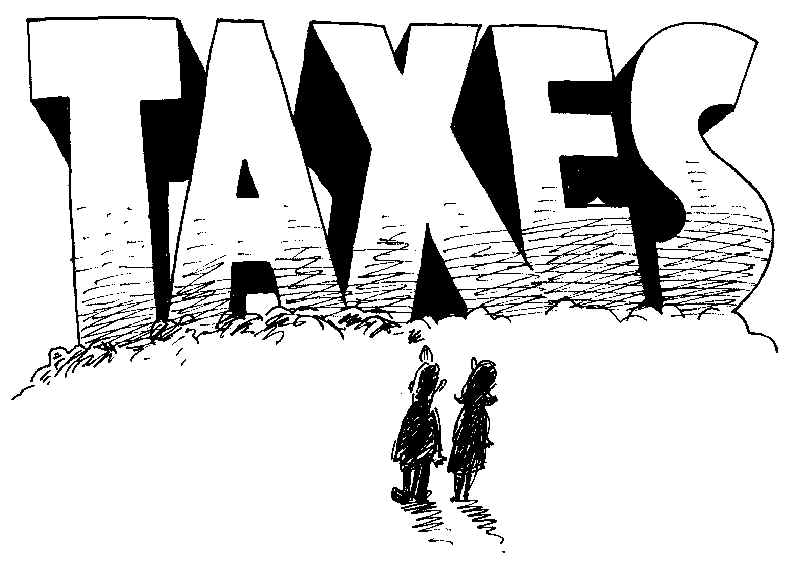
1. Don’t procrastinate. Resist the temptation to put off your taxes until the very last minute. Rushing to meet the filing deadline may cause you to overlook potential sources of tax savings and will likely increase your risk of making an error.

2. Visit the IRS website. More than 322 million visits were made to www.irs.gov in 2011. Make “1040 Central” your first stop to check for the latest news and find answers to your questions about tax filing.

3. Use Free File. Let Free File do the hard work with brand-name tax software or online fillable forms. It’s available exclusively at www.irs.gov. Everyone can find an option to prepare their tax return and e-file it for free. If you made $57,000 or less, you qualify for free tax software that is offered through a private-public partnership with manufacturers. If you made more than $57,000 and/or are comfortable preparing your own tax return, there’s Free File Fillable Forms, the electronic versions of IRS paper forms. Visit www.irs.gov/freefile for options.

4. Try IRS e-file.  Last year, 79 percent of taxpayers – 106 million people – used IRS e-file, which is the safest, easiest and most common way to file a tax return. If you owe taxes, you can file immediately and pay later (by the April 17 tax deadline). Best of all, when you combine e-file with direct deposit  the IRS can generally issue your refund in as few as 10 days.

5. Don’t panic if you can’t pay.  If you can’t pay the full amount of taxes you owe by the mid-April deadline, you should still file your return by the deadline and pay as much as you can to avoid penalties and interest. More than 75 percent of taxpayers eligible for an Installment Agreement can apply using the web-based Online Payment Agreement application available at www.irs.gov. To find out more about this simple and convenient process, type “Online Payment Agreement” in the search box at www.irs.gov.  You can also contact the IRS to discuss your payment options.

6. Request an extension of time to file – but pay on time.  If the deadline clock is ticking, you can get an automatic six-month extension through Oct. 15. However, this extension of time to file, which must be filed or postmarked by the April 17 deadline, does not give you more time to pay any taxes due. If you have not paid at least 90 percent of the total tax due by the April deadline you may also be subject to an estimated tax penalty. You can obtain an extension through Free File at www.irs.gov/freefile. Or, file Form 4868, Application for Automatic Extension of Time to File U.S. Individual Income Tax Return, available for downloading at www.irs.gov or by calling 800-TAX-FORM (800-829-3676) to have a paper form mailed to you. Allow at least 10 days for mailed forms and publications.

Posted in General | Tagged , , | Leave a comment

Six Facts About the Alternative Minimum Tax

The Alternative Minimum Tax attempts to ensure that anyone who benefits from certain tax advantages pays at least a minimum amount of tax. The AMT provides an alternative set of rules for calculating your income tax. In general, these rules should determine the minimum amount of tax that someone with your income should be required to pay. If your regular tax falls below this minimum, you have to make up the difference by paying alternative minimum tax.

Here are six facts the Internal Revenue Service wants you to know about the AMT and changes for 2011.

1. Tax laws provide tax benefits for certain kinds of income and allow special deductions and credits for certain expenses. These benefits can drastically reduce some taxpayers’ tax obligations. Congress created the AMT in 1969, targeting higher-income taxpayers who could claim so many deductions they owed little or no income tax.

2. Because the AMT is not indexed for inflation, a growing number of middle-income taxpayers are discovering they are subject to the AMT.

3. You may have to pay the AMT if your taxable income for regular tax purposes, plus any adjustments and preference items that apply to you, are more than the AMT exemption amount.

4. The AMT exemption amounts are set by law for each filing status.

5. For tax year 2011, Congress raised the AMT exemption amounts to the following levels

  • $74,450 for a married couple filing a joint return and qualifying widows and widowers;
  • $48,450 for singles and heads of household;
  • $37,225 for a married person filing separately.

6. The minimum AMT exemption amount for a child whose unearned income is taxed at the parents’ tax rate has increased to $6,800 for 2011.

Posted in General | Tagged , | Leave a comment

Ten Tips on a Tax Credit for Child and Dependent Care Expenses

If you paid someone to care for your child, spouse, or dependent last year, you may qualify to claim the Child and Dependent Care Credit when you file your federal income tax return. Below are 10 things the IRS wants you to know about claiming the credit for child and dependent care expenses.

1. The care must have been provided for one or more qualifying persons. A qualifying person is your dependent child age 12 or younger when the care was provided. Additionally, your spouse and certain other individuals who are physically or mentally incapable of self-care may also be qualifying persons. You must identify each qualifying person on your tax return.

2. The care must have been provided so you – and your spouse if you are married filing jointly – could work or look for work.

3. You – and your spouse if you file jointly – must have earned income from wages, salaries, tips, other taxable employee compensation or net earnings from self-employment. One spouse may be considered as having earned income if they were a full-time student or were physically o r mentally unable to care for themselves.

4. The payments for care cannot be paid to your spouse, to the parent of your qualifying person, to someone you can claim as your dependent on your return, or to your child who will not be age 19 or older by the end of the year even if he or she is not your dependent. You must identify the care provider(s) on your tax return.

5. Your filing status must be single, married filing jointly, head of household or qualifying widow(er) with a dependent child.

6. The qualifying person must have lived with you for more than half of 2011. There are exceptions for the birth or death of a qualifying person, or a child of divorced or separated parents. See Publication 503, Child and Dependent Care Expenses.

7. The credit can be up to 35 percent of your qualifying expenses, depending upon your adjusted gross income.

8. For 2011, you may use up to $3,000 of expenses paid in a year for one qualifying individual or $6,000 for two or more qualifying individuals to figure the credit.

The qualifying expenses must be reduced by the amount of any dependent 9. care benefits provided by your employer that you deduct or exclude from your income, such as a flexible spending account for daycare expenses.

10. If you pay someone to come to your home and care for your dependent or spouse, you may be a household employer and may have to withhold and pay Social Security and Medicare tax and pay federal unemployment tax. See Publication 926, Household Employer’s Tax Guide.

Posted in General | Leave a comment

What Employers Need to Know About Claiming the Small Business Health Care Tax Credit

If you are a small employer with fewer than 25 full-time equivalent employees that earn an average wage of less than $50,000 a year and you pay at least half of employee health insurance premiums…then there is a tax credit that may put money in your pocket.

The Small Business Health Care Tax Credit is specifically targeted to help small businesses and tax-exempt organizations. The credit can enable small businesses and small tax-exempt organizations to offer health insurance coverage for the first time. It also helps those already offering health insurance coverage to maintain the coverage they already have.

Here is what small employers need to know so they don’t miss out on the credit for tax year 2011:

  • Qualifying businesses calculate the small business health care credit on Form 8941, Credit for Small Employer Health Insurance Premiums, and claim it as part of the general business credit on Form 3800, General Business Credit, which they would include with their tax return.
  • Tax-exempt organizations can use Form 8941 to calculate the credit and then claim the credit on Form 990-T, Exempt Organization      Business Income Tax Return, Line 44f.
  • Businesses that couldn’t use the credit in 2011 may be eligible to claim it in future years. Eligible small employers can claim the credit for 2010 through 2013 and for two additional years beginning in 2014.

For tax years 2010 to 2013, the maximum credit for eligible small business employers is 35 percent of premiums paid and for eligible tax-exempt employers the maximum credit is 25 percent of premiums paid.  Beginning in 2014, the maximum credit will go up to 50 percent of qualifying premiums paid by eligible small business employers and 35 percent of qualifying premiums paid by eligible tax-exempt organizations.

Posted in General | Tagged , , | Leave a comment

Six Facts for Adoptive Parents

If you paid expenses to adopt an eligible child in 2011, you may be able to claim a tax credit of up to $13,360.

Here are six things the IRS wants you to know about the expanded adoption credit.

1. The Affordable Care Act increased the amount of the credit and made it refundable, which means you can get the credit as a tax refund even after your tax liability has been reduced to zero.

2. For tax year 2011, you must file a paper tax return, Form 8839, Qualified Adoption Expenses, and attach documents supporting the adoption. Taxpayers claiming the credit will still be able to use IRS Free File or other software to prepare their returns, but the returns must be printed and mailed to the IRS, along with all required documentation.

3. Documents may include a final adoption decree, placement agreement from an authorized agency, court documents and/or the state’s determination for special needs children.

4. Qualified adoption expenses are reasonable and necessary expenses directly related to the legal adoption of the child. These expenses may include adoption fees, court costs, attorney fees and travel expenses.

5. An eligible child must be under 18 years old, or physically or mentally incapable of caring for himself or herself.

6. If your modified adjusted gross income is more than $185,210, your credit is reduced. If your modified AGI is $225,210 or more, you cannot take the credit.

Posted in General | Tagged , , | Leave a comment

Mortgage Debt Forgiveness: 10 Key Points

Canceled debt is normally taxable to you, but there are exceptions. One of those exceptions is available to homeowners whose mortgage debt is partly or entirely forgiven during tax years 2007 through 2012.

The IRS would like you to know these 10 facts about Mortgage Debt Forgiveness:

1. Normally, debt forgiveness results in taxable income. However, under the Mortgage Forgiveness Debt Relief Act of 2007, you may be able to exclude up to $2 million of debt forgiven on your principal residence.

2. The limit is $1 million for a married person filing a separate return.

3. You may exclude debt reduced through mortgage restructuring, as well as mortgage debt forgiven in a foreclosure.

4. To qualify, the debt must have been used to buy, build or substantially improve your principal residence and be secured by that residence.

5. Refinanced debt proceeds used for the purpose of substantially improving your principal residence also qualify for the exclusion.

6. Proceeds of refinanced debt used for other purposes – for example, to pay off credit card debt – do not qualify for the exclusion.

7. If you qualify, claim the special exclusion by filling out Form 982, Reduction of Tax Attributes Due to Discharge of Indebtedness, and attach it to your federal income tax return for the tax year in which the qualified debt was forgiven.

8. Debt forgiven on second homes, rental property, business property, credit cards or car loans does not qualify for the tax relief provision. In some cases, however, other tax relief provisions – such as insolvency – may be applicable. IRS Form 982 provides more details about these provisions.

9. If your debt is reduced or eliminated you normally will receive a year-end statement, Form 1099-C, Cancellation of Debt, from your lender. By law, this form must show the amount of debt forgiven and the fair market value of any property foreclosed.

10. Examine the Form 1099-C carefully. Notify the lender immediately if any of the information shown is incorrect. You should pay particular attention to the amount of debt forgiven in Box 2 as well as the value listed for your home in Box 7.


Posted in General | Tagged , , , , | Leave a comment

Six Tips on a Tax Credit for Retirement Savings

If you make eligible contributions to an employer-sponsored retirement plan or to an individual retirement arrangement, you may be eligible for a tax credit, depending on your age and income.

Here are six things the IRS wants you to know about the Savers Credit:

1. Income limits The Savers Credit, formally known as the Retirement Savings Contributions Credit, applies to individuals with a filing status and 2011 income of:

  • Single, married filing separately, or qualifying      widow(er), with  income up to $28,250
  • Head of Household with income up to $42,375
  • Married Filing Jointly, with incomes up to $56,500

2. Eligibility requirements To be eligible for the credit you must be at least 18 years of age, you cannot have been a full-time student during the calendar year and cannot be claimed as a dependent on another person’s return.

3. Credit amount If you make eligible contributions to a qualified IRA, 401(k) and certain other retirement plans, you may be able to take a credit of up to $1,000 ($2,000 if filing jointly). The credit is a percentage of the qualifying contribution amount, with the highest rate for taxpayers with the least income.

4. Distributions When figuring this credit, you generally must subtract distributions you received from your retirement plans from the contributions you made. This rule applies to distributions received in the two years before the year the credit is claimed, the year the credit is claimed, and the period after the end of the credit year but before the due date – including extensions – for filing the return for the credit year.

5. Other tax benefits The Retirement Savings Contributions Credit is in addition to other tax benefits you may receive for retirement contributions. For example, most workers at these income levels may deduct all or part of their contributions to a traditional IRA. Contributions to a regular 401(k) plan are not subject to income tax until withdrawn from the plan.

6. Forms to use To claim the credit use Form 8880, Credit for Qualified Retirement Savings Contributions.

Posted in General | Tagged , , , | Leave a comment

Ten Things to Know About Capital Gains and Losses

Did you know that almost everything you own and use for personal or investment purposes is a capital asset? Capital assets include a home, household furnishings and stocks and bonds held in a personal account. When you sell a capital asset, the difference between the amount you paid for the asset and its sales price is a capital gain or capital loss.

Here are 10 facts from the IRS about how gains and losses can affect your federal income tax return.

1. Almost everything you own and use for personal purposes, pleasure or investment is a capital asset.

2. When you sell a capital asset, the difference between the amount you sell it for and your basis – which is usually what you paid for it – is a capital gain or a capital loss.

3. You must report all capital gains.

4. You may only deduct capital losses on investment property, not on personal-use property.

5. Capital gains and losses are classified as long-term or short-term. If you hold the property more than one year, your capital gain or loss is long-term. If you hold it one year or less, the gain or loss is short-term.

6. If you have long-term gains in excess of your long-term losses, the difference is normally a net capital gain. Subtract any short-term losses from the net capital gain to calculate the net capital gain you must report.

7. The tax rates that apply to net capital gain are generally lower than the tax rates that apply to other income. For 2011, the maximum capital gains rate for most people is 15 percent. For lower-income individuals, the rate may be 0 percent on some or all of the net capital gain. Rates of 25 or 28 percent may apply to special types of net capital gain.

8. If your capital losses exceed your capital gains, you can deduct the excess on your tax return to reduce other income, such as wages, up to an annual limit of $3,000, or $1,500 if you are married filing separately.

9. If your total net capital loss is more than the yearly limit on capital loss deductions, you can carry over the unused part to the next year and treat it as if you incurred it in that next year.

10. This year, a new form, Form 8949, Sales and Other Dispositions of Capital Assets, will be used to calculate capital gains and losses. Use Form 8949 to list all capital gain and loss transactions. The subtotals from this form will then be carried over to Schedule D (Form 1040), where gain or loss will be calculated.

Posted in General | Tagged , , , | Leave a comment

Early Distribution from Retirement Plans May Have a Tax Impact

Taxpayers may sometimes find themselves in situations when they need to withdraw money from their retirement plan early. What they may not realize is that that transaction may mean a tax impact when they file their return.
Here are 10 facts from the IRS about the tax implications of an early distribution from your retirement plan.
1. Payments you receive from your Individual Retirement Arrangement before you reach age 59 ½ are generally considered early or premature distributions.
2. Early distributions are usually subject to an additional 10 percent tax.
3. Early distributions must also be reported to the IRS.
4. Distributions you roll over to another IRA or qualified retirement plan are not subject to the additional 10 percent tax. You must complete the rollover within 60 days after the day you received the distribution.
5. The amount you roll over is generally taxed when the new plan makes a distribution to you or your beneficiary.
6. If you made nondeductible contributions to an IRA and later take early distributions from your IRA, the portion of the distribution attributable to those nondeductible contributions is not taxed.
7. If you received an early distribution from a Roth IRA, the distribution attributable to your prior contributions is not taxed.
8. If you received a distribution from any other qualified retirement plan, generally the entire distribution is taxable unless you made after-tax employee contributions to the plan.
9. There are several exceptions to the additional 10 percent early distribution tax, such as when the distributions are used for the purchase of a first home (up to $10,000), for certain medical or educational expenses, or if you are totally and permanently disabled.
10. For more information about early distributions from retirement plans, the additional 10 percent tax and all the exceptions, see IRS Publication 575, Pension and Annuity Income and Publication 590, Individual Retirement Arrangements (IRAs). Both publications are available at www.irs.gov or by calling 800-TAX-FORM (800-829-3676).

Links:
• Publication 575, Pensions and Annuities (PDF 227K)
• Publication 590, Individual Retirement Arrangements (IRAs) (PDF 449K)
• Form 5329, Additional Taxes on Qualified Plans (including IRAs) and Other Tax Favored Accounts (PDF 72K)
• Form 5329 Instructions (PDF 40K)

Posted in General | Leave a comment

Four Things to Know About Bartering

In today’s economy, small business owners sometimes save money through bartering to get products or services they need. The IRS wants to remind small business owners that the fair market value of property or services received through barter is taxable income.

Bartering is the trading of one product or service for another. Usually there is no exchange of cash. However, the fair market value of the goods and services exchanged must be reported as income by both parties.

Here are four facts on bartering :

1. Organized barter exchanges A barter exchange functions primarily as the organizer of a marketplace where members buy and sell products and services among themselves. Whether this activity operates out of a physical office or is internet-based, a barter exchange is generally required to issue Form 1099-B, Proceeds from Broker and Barter Exchange Transactions, annually to their clients or members and to the IRS.

2. Barter income Barter dollars or trade dollars are identical to real dollars for tax reporting purposes. If you conduct any direct barter – barter for another’s products or services – you must report the fair market value of the products or services you received on your tax return.

3. Tax implications of bartering Income from bartering is taxable in the year it is performed. Bartering may result in liabilities for income tax, self-employment tax, employment tax or excise tax. Your barter activities may result in ordinary business income, capital gains or capital losses, or you may have a nondeductible personal loss.

4. How to report The rules for reporting barter transactions may vary depending on which form of bartering takes place. Generally, you report this type of business income on Form 1040, Schedule C Profit or Loss from Business, or other business returns such as Form 1065 for Partnerships, Form 1120 for Corporations or Form 1120-S for Small Business Corporations.

Posted in General | Tagged , , , | Leave a comment