Hertz announced that it will buy 100,000 electric vehicles from Tesla, one of the largest purchases of battery-powered cars in history and the latest evidence of the nation’s increasing commitment to EV technology. The news of the deal triggered a rally in Tesla’s stock, driving the carmaker’s market value over the $1 trillion mark for the first time.
The purchase by one of the world’s leading rental car companies reflects its confidence that electric vehicles are gaining acceptance with environmentally minded consumers as an alternative to vehicles powered by petroleum-burning internal combustion engines. Teslas are said to already be arriving at the company’s sites and should be available for rental starting in November. Hertz said in its announcement that it will complete its purchases of the Tesla Model 3 small cars by the end of 2022. It also said it will establish its own electric vehicle charging network as it strives to produce the largest rental fleet of electric vehicles in North America.
The KSHB 41 I-Team traveled to the waterfront Lake of the Ozarks house owned by a Kansas City-area businessman who’s accused of purchasing the property with COVID-19 relief funds.
The IRS accuses Campbell of money laundering and wire fraud in connection to the purchase of the lake house, in addition to two vehicles. While federal officers seized the vehicles in May, records with Morgan County Assessor’s Office show Campbell’s wife is still listed as the owner of the lake house.
The affidavit filed on behalf of the IRS shows Campbell fraudulently received $936,000 in COVID-19 relief funds in early 2020. The IRS says shortly after Campbell received the funds, he began transferring money between bank accounts. On May 26, 2020, federal officers say Campbell transferred $87,849 from his bank account to a title company to purchase the home on Lake of the Ozarks.
According to the documents, the Small Business Administration’s computer systems flagged duplicate applications from Campbell’s businesses for COVID-19 relief funds. The SBA says Campbell filed 20 applications under various business names for relief, five of which were approved. When an employee with the SBA began looking into the loans, she discovered Campbell’s businesses didn’t qualify.
The employee also states Campbell was asked to submit tax returns to help process his applications, which contained numerous errors. One of the businesses Campbell received a loan for hasn’t been active with the Kansas Secretary of State since 2016. According to the affidavit, the IRS did not put in a request to seize the lake house.
If you would like to speak with an attorney call us at 816-524-4949 or visit our website to schedule a free consultation.
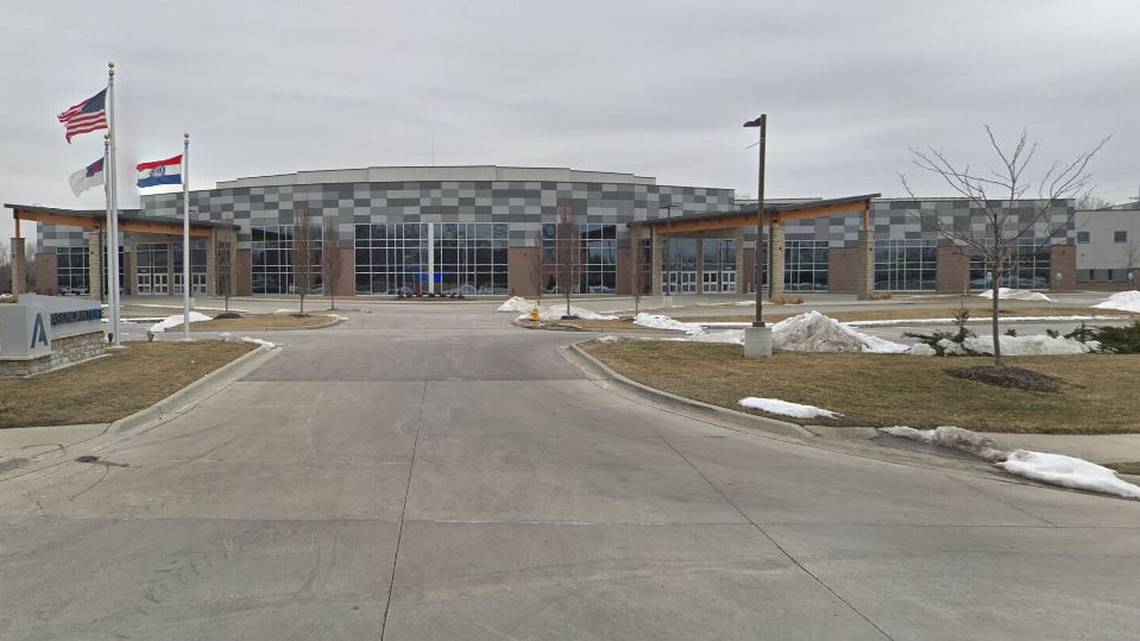
Acknowledging they would likely lose in court, Jackson County and its health department will pay the legal fees of an eastern Jackson County mega church that challenged the county’s COVID-19 restrictions in federal court.
The $146,750 payment to Abundant Life Baptist Church and attorney Jonathan R. Whitehead settles the case filed in May 2020. In exchange for the church dropping its lawsuit, the county agreed that any future health restrictions would be no more onerous on churches than secular gatherings.
Responsibility for paying the settlement is being shared equally by county government and University Health, formerly known as Truman Medical Centers, which runs the county health department.
Abundant Life, which holds services in Blue Springs and Lee’s Summit, had alleged that the county’s COVID-19 recovery plan violated both the U.S. and Missouri constitutions by discriminating against religion.
Thousands attend services each week at Abundant Life. But under the county’s initial easing of COVID-19 restrictions, church services were grouped with other large gatherings and social events and limited to no more than 10 people.
Have you been affected financially by the COVID-19 pandemic? Call us at 816-524-4949 or visit our website to schedule a free consultation with an attorney.
Sales of new homes jumped 14% in September to the fastest pace in six months as strong demand helped offset rising prices, the Associated Press reported. The Commerce Department reported Tuesday that sales of new single-family homes rose to a seasonally adjusted annual rate of 800,000 units last month, well above what economists had been expecting. However, the government revised lower its estimates for sales in the previous two months, with August now showing a 1.4% decline to a rate of 702,000 units. The September sales pace was the strongest since sales reached an annual rate of 873,000 in March. The median price of a new home, the point where half the homes sold for more and half for less, rose to a record $408,800 in September, up 9.5% from a year ago. The average sales prices in September increased to $451,700, up 11.5% from a year ago.
If you would like to speak with an attorney, call us at 816-524-4949 or visit our website to schedule a consultation.
Roughly $10 billion of a $46 billion pool of federal rental aid has made it to renters, landlords and utility companies after another $2.8 billion was disbursed by state and local governments in September. Treasury said that funds from the Emergency Rental Assistance (ERA) program reached more than 510,000 households last month and more than 2 million since the initiative began this year. The department had distributed the entirety of the $46 billion to eligible state and local entities in May to help struggling renters avoid eviction upon the expiration of federal and state moratoria.
The urgency to expedite the rental aid distribution process ramped up in August when the Supreme Court struck down the Centers for Disease Control and Prevention’s (CDC) eviction moratorium, which was imposed in September 2020. But despite months of pressure from Treasury and attempts to loosen red tape, nearly 75 percent of the rental assistance funds have yet to reach the intended recipients. Even so, the mass wave of evictions that many policymakers feared has not materialized thanks in part to state and local eviction bans, court backlogs and eviction diversion strategies, according to data from Princeton University’s Eviction Lab.
If you’re struggling financially and would like to speak with an attorney, call us at 816-524-4949 or visit our website to schedule a consultation.
A multi-agency human trafficking sting out of Platte County resulted in the arrest of a Lee’s Summit man and the rescue of two women authorities say were victims of trafficking.
Sean D. Green, 29, was charged with felony trafficking for the purpose of sexual exploitation and faces up to 20 years in prison if convicted, according to Platte County Prosecutor Eric Zahnd. Green is being held in the Platte County jail on $50,000 bond.
“Operation United Front” was headed by the Missouri State Highway Patrol’s Division of Drug and Crime Control and the Department of Homeland Security in Platte County in late August. It also included the FBI, Kansas City police, Riverside police and the Missouri Attorney General’s Office.
“Fourteen adults were contacted during the operation, and two of those adults were identified as victims of human trafficking,” the prosecutor said. “We now allege that the defendant advertised and directed these women to engage in sex acts for his own financial gain.”
Court documents state that the women were sent on “dates” by Green to perform sex acts negotiated between Green and the clients. The women would then return to Green with the money.
“Human and sex trafficking are a scourge on our society, a dark underworld that operates in the shadows across Missouri and the country,” said Attorney General Eric Schmitt. “This case underscores the importance of operations like Operation United Front in rooting out human trafficking.”
Families come in all shapes and sizes – and some families may not realize they could receive advance payments of the 2021 child tax credit in the last months of this year. The IRS urges grandparents, foster parents or people caring for siblings or other relatives to check their eligibility.
For tax year 2021, families claiming the child tax credit will receive:
• Up to $3,000 per qualifying child between the ages of 6 and 17 at the end of 2021 • Up to $3,600 per qualifying child under age 6 at the end of 2021
The total of the advance payments, paid in 2021, will be up to 50 percent of the child tax credit.
A qualifying child can be a filer’s:
• son or daughter • stepchild • eligible foster child • siblings, including stepsiblings or half-siblings • a descendent of any of the above – for example a grandchild, niece or nephew.
Generally, a family qualifies for advance child tax credit payments if they have a qualifying child. Also, an individual — or their spouse, if married filing a joint return — must have their main home in one of the 50 states or the District of Columbia for more than half the year. In addition to the relationship requirements above, the child must also satisfy the following conditions:
1. For tax year 2021, a qualifying child is an individual who does not turn 18 before January 1, 2022 and the individual does not provide more than one-half of his or her own support during 2021. 2. The individual lives with the taxpayer for more than one-half of tax year 2021. For exceptions to this requirement, see IRS Publication 972, Child Tax Credit and Credit for Other Dependents. 3. The individual is properly claimed as the taxpayer’s dependent. For more information about how to properly claim an individual as a dependent, see IRS Publication 501, Dependents, Standard Deduction, and Filing Information. 4. The individual does not file a joint return with the individual’s spouse for tax year 2021 or files it only to claim a refund of withheld income tax or estimated tax paid. 5. The individual was a U.S. citizen, U.S. national, or U.S. resident alien. For more information on this condition, see IRS Publication 519, U.S. Tax Guide for Aliens.
How to get advance payments
The IRS’s Non-filer Sign-up Tool helps people who normally don’t have to file a tax return complete a simplified return to get advance child tax credit payments, the recovery rebate credit and Economic Impact Payments. The IRS tool is available through October 15, 2021.
People who are required to file a tax return should check IRS.gov in coming weeks. The IRS Child Tax Credit Update Portal will be updated to allow families to inform the IRS about the qualifying children they will claim on their 2021 tax return. The IRS can then adjust the family’s estimated 2021 child tax credit – and therefore adjust the amount of monthly advance child tax credit payments.
Courtesy of the IRS
If a family doesn’t receive advance child tax credit payments for a qualifying child, they can claim for 2021, they may claim the full amount of the allowable child tax credit for that child by filing a 2021 tax return.
Need tax assistance? Give us a call at 816-524-4949 or visit our website to schedule a consultation.
Bankruptcy Judge John E. Waites demanded $10,000 in sanctions under Rule 9011 for filing a Section 362(k) complaint asking for $50,000 in actual and punitive damages. The debtor owed about $900 to his doctor but did not list it in his chapter 13 papers. Six weeks after filing, the doctor’s office sent him a letter asking him to call, saying the debt was in default and might be sent to collections.
The debtor’s counsel informed the doctor’s office about the bankruptcy filing, but the office staff failed to save the change electronically. The debtor scheduled the debt and sent notices to the doctor. Two months later, the doctor’s computer system automatically sent the same letter again asking for payment. Without contacting the doctor’s office again, debtor’s counsel initiated an adversary proceeding asking for $50,000 in damages. The complaint alleged that the stay violation was flagrant, willful, intentional, wanton aggressive, devious, deceptive, manipulative, oppressive and abusive. The complaint went on to say that the debtor “would show” that the second collection letter was sent “with the express intent to annoy, threaten, cause harm, abuse, intimidate or harass.” The doctor admitted violating the automatic stay but contended it was in error.
The doctor’s lawyer sent the debtor’s counsel a draft of a motion for sanctions for violation of rule 9011(b). The debtor’s counsel did not withdraw the complaint or accept a settlement offer, so the doctor’s lawyer filed the sanctions motion. The sanctions motion pointed to the strident claims in the complaint and alleged that it was filed without an investigation reasonable in the circumstances and for an improper purpose, namely, to seek a settlement or payment rather than stop a stay violation.
There are numerous other cases in which this debtor’s attorney filed complaints seeking tens of thousands of dollars in damages based on “similar allegations of egregious conduct” arising from collection letters.
Considering bankruptcy? Give us a call at 816-524-4949 or visit our website to schedule a consultation with an attorney to determine if that is your best option.
A utility executive who repeatedly lied to keep investors pumping money into South Carolina’s $9 billion nuclear reactor debacle will spend two years in prison for fraud, a federal judge decided. Former SCANA Corp. CEO Kevin Marsh agreed with prosecutors that he should serve the sentence and the judge approved the deal, making him the first executive put behind bars for misleading the public on the project, which failed without ever generating a watt of power. Marsh said that he wants to serve his time as soon as he can because his wife of 46 years has incurable breast cancer, and he hopes to care for her after leaving prison. The judge agreed to have him report to a federal prison in North Carolina in early December.
U.S. District Judge Mary Geiger Lewis cited Marsh’s remorse and expansive cooperation with federal authorities as she reluctantly accepted the plea deal, which is well below the federal sentencing guidelines of five years. She said the prosecution and defense depiction of the crime Marsh committed is a “vanilla way to describe it,” adding that it understates “the seriousness of this non-disclosure.” A second former SCANA executive and an official at Westinghouse Electric Co., the lead contractor to build two new reactors at the V.C. Summer plant, have also pleaded guilty. A second Westinghouse executive has been indicted and is awaiting trial. Marsh pleaded guilty in federal court in February to conspiracy to commit wire and mail fraud, and in state court to obtaining property by false pretenses.
Recent legislation includes several provisions to help individuals and businesses who give to charity. The new law generally extends four temporary tax changes through the end of 2021. Here’s an overview of these changes.
Deduction for individuals who don’t itemize Usually taxpayers who take the standard deduction cannot deduct their charitable contributions. The law now permits taxpayers to claim a limited deduction on their 2021 federal income tax returns for cash contributions they made to certain qualifying charitable organizations.
These taxpayers, including married individuals filing separate returns, can claim a deduction of up to $300 for cash contributions to qualifying charities during 2021. The maximum deduction is $600 for married individuals filing joint returns.
Cash donations Most cash donations made to charity qualify for the deduction. However, there are some exceptions. Cash contributions that are not tax deductible include those:
These exceptions also apply to taxpayers who itemize their deductions.
Cash contributions include those made by check, credit card or debit card as well as unreimbursed out-of-pocket expenses in connection with volunteer services to a qualifying charitable organization. Cash contributions don’t include the value of volunteer services, securities, household items or other property.
100% limit on eligible cash contributions made by taxpayers who itemize deductions in 2021 Taxpayers who itemize can generally claim a deduction for charitable contributions to qualifying organizations. The deduction is typically limited to 20% to 60% of their adjusted gross income and varies depending on the type of contribution and the type of charity.
The law now allows taxpayers to apply up to 100% of their AGI, for calendar-year 2021 qualified contributions. Qualified contributions are cash contributions to qualifying charitable organizations.
The 100% limit is not automatic; the taxpayer must choose to take the new limit for any qualified cash contribution. Otherwise, the usual limit applies. The taxpayer’s other allowed charitable contribution deductions reduce the maximum amount allowed under this election. Eligible individuals must make their elections on their 2021 Form 1040 or Form 1040-SR.
Corporate limit increased to 25% of taxable income The law now permits C corporations to apply an increased corporate limit of 25% of taxable income for charitable cash contributions made to eligible charities during calendar year 2021. The increased limit is not automatic. C corporations must the choose the increased corporate limit on a contribution-by-contribution basis.
Courtesy of the IRS
Increased limits on amounts deductible by businesses for certain donated food inventory Businesses donating food inventory that are eligible for the existing enhanced deduction may qualify for increased deduction limits. For contributions made in 2021, the limit is increased to 25%. For C corporations, the 25% limit is based on their taxable income. For other businesses, including sole proprietorships, partnerships, and S corporations, the limit is based on their total net income for the year. A special method for computing the enhanced deduction continues to apply, as do food quality standards and other requirements.
Need help with taxes? Call us at 816-524-4949 or visit our website to book a free consultation.